Bigender
Bigender means having two distinct gender identities, held either at the same time or in alternation. The pair is not always male and female. The Nonbinary Wiki records people whose two genders are female and Neutrois, or Agender and Aporagender, and the sex educator Goody Howard, speaking to Cosmopolitan, gives feminine and genderqueer, or agender and transmasculine, as further pairs. The assumption that the word must mean a man and a woman is the commonest misreading of it.
What the record holds for Bigender
First documented
1992
Donna Mobley wrote of being dual-gendered in the magazine The Femme Mirror in 1992. The Nonbinary Wiki records the Human Outreach and Achievement Institute defining bigenderist in the 1980s, without giving a year.
Coined by
Not on record. The word is in use with no traceable author, which is the ordinary case for vocabulary that grew inside a community rather than being announced.
How common
Established minority term
2.3 per cent of gender-diverse survey respondents
Merriam-Webster carries bigender, which puts it among the small number of terms in this catalogue with a dictionary of record behind it. The dictionary gives two senses, and only the second is an identity: the older one means designed for or including the male and female genders, illustrated by a bi-gender group of lawmakers introducing a bill on equal numbers of restrooms in federal buildings, and by a critic writing about the bigender sitcom as a trend in television.
Where bigender was written down first
The earliest dated attestation on file is 1992, when Donna Mobley wrote in The Femme Mirror magazine that she was neither a man pretending to be a woman nor a woman pretending to be a man, that she was dual-gendered and happily so, and that Don and Donna coexisted and together made up all that she was. Before that the Nonbinary Wiki records the Human Outreach and Achievement Institute, a trans organisation, defining bigenderist as a type of androgyne in the 1980s, without a year, where androgyne meant a person able to express either alternative gender role comfortably across a range of socially acceptable settings.
The trans man Gary Bowen defined bigendered in his 1995 Dictionary of Words for Masculine Women as having two genders and exhibiting the cultural characteristics of male and female roles. A 1997 paper on the gender continuum in the International Journal of Transgenderism observed that a person who feels or acts as both a woman and a man may identify as bi-gendered, and described a neighbouring case it called genderblended, holding both binary genders while being more man than woman, or more woman than man. A 2010 encyclopedia files bigender as a type of androgyne, alongside pangender, ambigender, nongendered, agender, gender fluid and intergender.
The word therefore predates the online coinages that fill much of this catalogue, and its early record sits in printed community magazines and self-published dictionaries. Them dates the popularisation to the 1980s, inside queer and trans communities, and names no single publication. The later markers are commercial: bigender was among the fifty-six gender options Facebook added in 2014 and among the thirty-seven Tinder added in 2017. The two records on file disagree about the dictionaries. The Nonbinary Wiki dates the Dictionary.com entry to 2015; Them dates the same entry to 2019. The American Psychological Association treats bigender as a subset of the transgender group.
Why bigender is not always genderfluid
Genderfluid and bigender answer different questions and overlap only in part. A bigender person whose two genders alternate is fluid by any reading, and the Nonbinary Wiki treats that case as a kind of genderfluid identity, one that may involve only the two genders or the shades of grey between them. A bigender person who holds both genders at once for a lifetime is not fluid at all, because nothing is moving. Them makes the point directly: some bigender people experience the same two genders at the same time their whole lives.
Genderflux is a third arrangement. Flux is a change in how strongly a gender is felt, so a bigender person can hold two genders steadily while the intensity of either rises and falls. Pangender is a fourth: bi fixes the count at two, pan takes in all of them.
How bigender differs from ambigender
Ambigender is the narrow word and the useful contrast. It names exactly two genders held simultaneously, static, with no fluidity or shifting, so a person who alternates is bigender but not ambigender. Bigender covers both arrangements, which is why the Nonbinary Wiki files ambigender underneath it. Trigender and Polygender extend the same idea to larger counts, and all of them sit under the Multigender umbrella. The prefix counts the genders; it does not name them.
What has been studied and counted about bigender
In 2012 Laura Case and Vilayanur Ramachandran reported in Medical Hypotheses on bigender people describing involuntary alternation between female and male states, and named the pattern alternating gender incongruity. They proposed that the alternation might reflect an unusual degree of hemispheric switching in the brain, with the suppression of sex-appropriate body maps in the parietal cortex, and suggested that tracking the nasal cycle and the rate of binocular rivalry might reveal a physiological basis for it. Their stated grounds were ancient and modern associations between the left and right hemispheres and the male and female genders. The paper presents itself as a hypothesis, and its authors noted that no scientific literature had at that point attempted to explain or even describe bigenderism, which they attributed to low prevalence and to the recent adoption of the term by bigender people themselves.
Little has been added since. Mark Blechner's 2015 paper in Contemporary Psychoanalysis takes up the term to describe people who combine male and female gender identities, and its main work is to keep it apart from bisexuality, which it restricts to sexual attraction. Pere Estupinyà's 2016 popular science book gives a page to people who alternate cycles of male and female identity and calls the subject little known.
The measurement is similarly sparse. A 1999 survey by the San Francisco Department of Public Health found fewer than 3 per cent of transgender respondents assigned male at birth, and fewer than 8 per cent of those assigned female at birth, identifying as bigender. The Nonbinary Wiki records a frequency of 2.3 per cent. Each counts the gender-diverse people its own source reached, and neither share can be scaled up to a country.
Why bigenderism names opposite things
The derived noun is a trap. Bigenderism has two etymologies and they point in contrary directions, and the older of the two is a word for the thing bigender people are up against.
| The critical sense | The identity sense | |
|---|---|---|
| What it names | the theory that society enforces a strict male-female binary, privileges maleness over femaleness, and in its strict form ties gender to assigned sex | the state of being bigender, of having two genders at once |
| Formed from | bi- and gender, on the model of other names for a social system | bigender and -ism |
| Earliest citation on file | Miqqi Alicia Gilbert in "Transgender Tapestry", 2003 | Case and Ramachandran in Medical Hypotheses, 2012 |
| Where it recurs | Gilbert in Hypatia in 2009, and a 2020 study of organisational responses to trans employees | Blechner in 2015, Estupinyà in 2016 |
Gilbert's usage is the sharper of the two. Her 2003 piece calls bigenderism a plague that specifically punishes gender-diverse people, and a cross many children have to bear. Her 2009 Hypatia paper sets out the structure: basic bigenderism requires legal documents and public institutions to designate a single invariant gender, and strict bigenderism applies those categories in a social context that stigmatises men and women who fall short of the ideals the scheme sets. A reader who meets the word in that literature is not reading about the identity at all.
How bigender people describe themselves
The Nonbinary Wiki's account of expression is that bigender people move between feminine and masculine gender-typed behaviour depending on context, with some holding a distinct feminine persona and a distinct masculine one, and others working in the shades of grey between them. Merriam-Webster's illustrative sentences say the same twice over, once to note that a bigender person might alter their gender expression at different times and might equally not.
Pronouns follow no rule. Both sources that discuss them say the same thing: some bigender people use both binary sets, some pair a binary set with they/them, some use rolling combinations such as he/they or she/they, and some use neopronouns, with ze/zir, xe/xem and fae/faer given as examples. The advice both give is to ask.
Self-descriptions in print are the best evidence of the range. The Slovak drum and bass producer B-Complex, who releases as Matia and as Maťo Lenická, has written of being a transgender person and bi-gender in particular. The Canadian science fiction writer A.M. Dellamonica describes themself as bigendered. James-Beth Merritt published a memoir in 2018 titled Bi-Gender: A Candid Nonbinary Memoir.
The flags carry their own history. Two designs by the Tumblr user no-bucks-for-this-doe were posted in July 2014, with seven horizontal stripes reading pink for femininity, blue for masculinity, purple for non-binary and white shading to grey for agender and other neutral genders, and the pinks and blues placed at opposite ends to show separation alongside coexistence. Alternative designs multiplied later after allegations about the designer's conduct, and in April 2022 a Tumblr user claiming to be the designer wrote that the flag's use was not theirs to control, that flags belong to the community rather than to the maker, and that its phasing out was welcome. Them names a design by the Tumblr user Camp MLM as one of the more widely accepted, in which the pink and blue stand for gender presentation, the upper white stripe for good relationships, the purple for the individuality of each bigender experience and the lower white stripe for self respect.
Told apart
Bigender vs Ambigender and Genderfluid
- AmbigenderAmbigender is the static case: exactly two genders at once, with no shifting. Bigender covers that arrangement and the alternating one too, so an ambigender person is bigender and not the reverse.
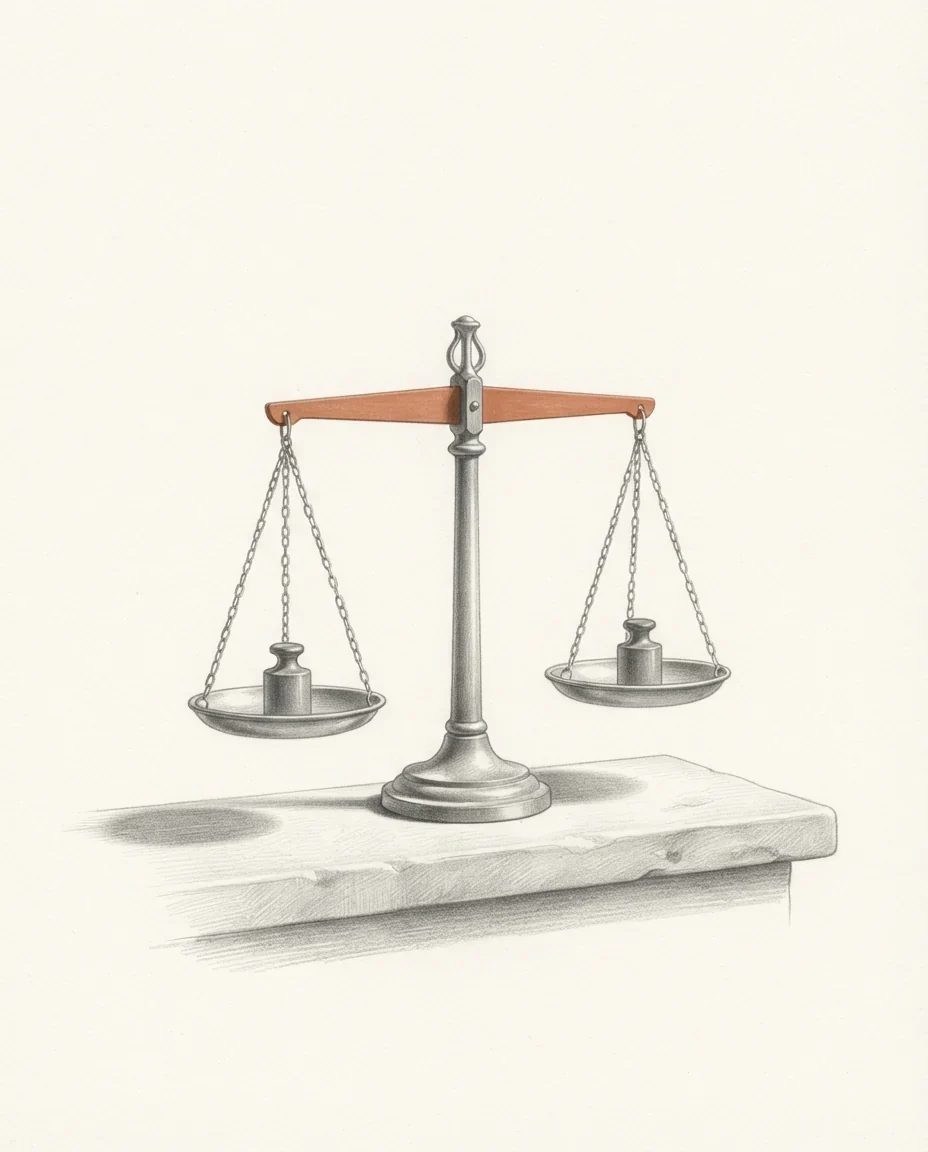
- GenderfluidGenderfluid changes which gender is present. Bigender states how many are held, two, and a bigender person whose pair alternates is fluid as well while one who holds both at once is not.

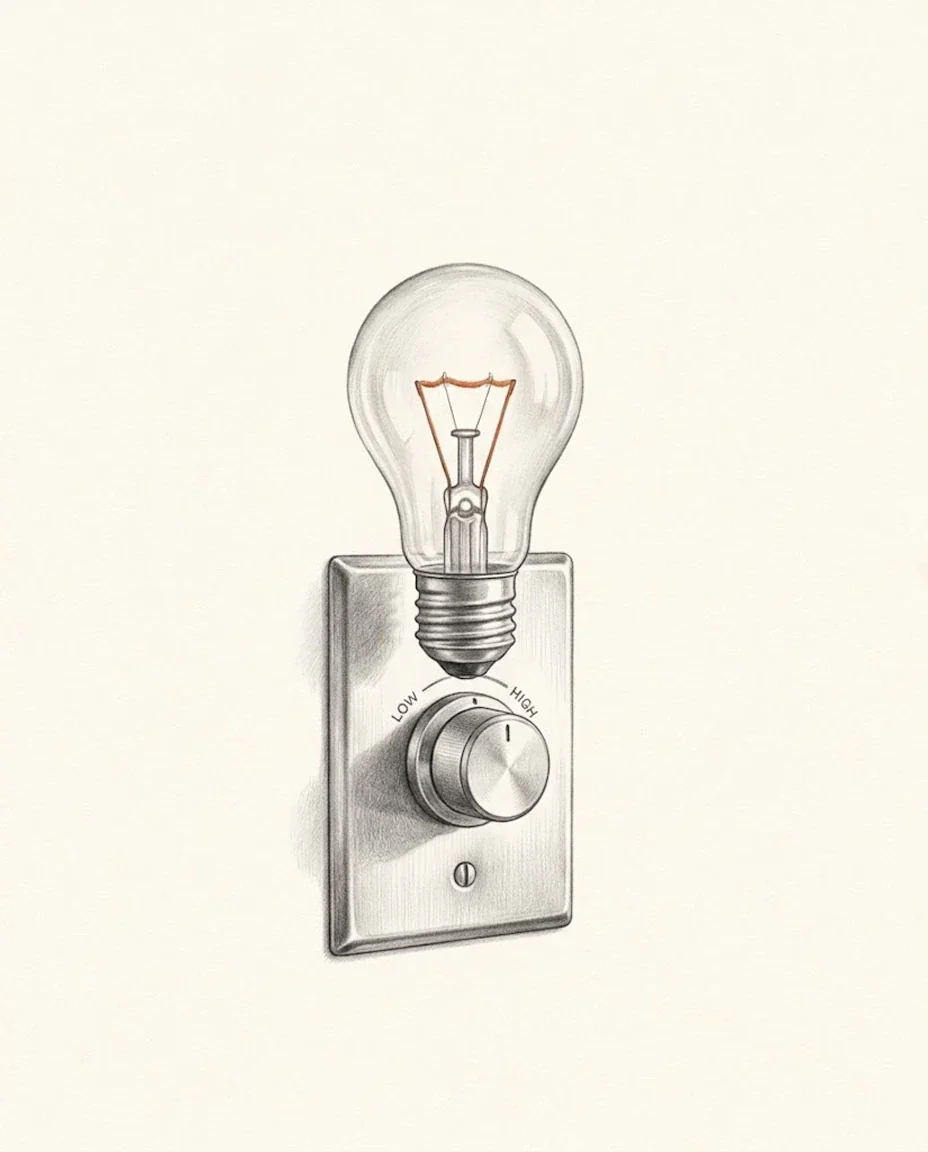
- GenderfluxGenderflux changes how strongly a gender is felt rather than which gender it is. Holding two genders at once is a third arrangement and neither fluid nor flux describes it.
- MultigenderThe umbrella bigender sits under, beside trigender, polygender and pangender. Multigender says there is more than one; bigender says how many.

Common questions
Questions about Bigender
- What is the difference between bigender and ambigender?
- Bigender covers two genders held at once and two genders alternating. Ambigender covers only the first: exactly two genders experienced simultaneously, static, without fluidity or shifting. Every ambigender person is bigender by that reading, and a bigender person who moves between two genders is not ambigender.
- Can a bigender person also be genderfluid?
- Yes, where the two genders alternate rather than sit together. The Nonbinary Wiki treats alternating bigender as a form of genderfluid identity, with the movement restricted to two genders or to shades between them. A bigender person who holds both genders continuously is not genderfluid, and Them notes that some experience the same pair for their whole lives.
- Does bigender always mean man and woman?
- No, and the assumption is the usual misreading. The two genders can be the binary pair, or a binary gender and a nonbinary one such as female and neutrois, or two nonbinary genders such as agender and aporagender. What the word fixes is the count.
- Is bigender in a dictionary?
- Merriam-Webster carries it, with an older non-identity sense meaning including both the male and female genders and a separate sense for the identity. Dictionary.com carries an entry too, dated to 2015 by the Nonbinary Wiki and to 2019 by Them.
- When was bigender first written down?
- The earliest dated use on file is 1992, in the magazine The Femme Mirror, where Donna Mobley described herself as dual-gendered. The Nonbinary Wiki puts a definition of bigenderist by the Human Outreach and Achievement Institute in the 1980s without naming a year, and Gary Bowen's Dictionary of Words for Masculine Women carried bigendered in 1995. That places the word well before the online coinages it is usually grouped with.
- What does bigenderism mean?
- Two contrary things, depending on which literature the reader is in. Miqqi Alicia Gilbert used it from 2003 onwards for the theory that society enforces a strict male-female binary and ties gender to assigned sex, which names a social system rather than an identity. Formed separately from bigender and the suffix, it names the state of having two genders, the sense Case and Ramachandran used in 2012.
Added 2026-08-28 · Revised 2026-09-07
The evidence behind the word
How thoroughly Bigender has been counted
Not how common the word is. How much of a population anybody has actually measured it across, on a six-step scale where each step is defined by the kind of evidence it takes to reach it, never by a score. The full method.
Established minority term
2.3 per cent of gender-diverse survey respondents
Nonbinary Wiki frequency figure
1-10% of gender-diverse respondents in community surveys (checkbox or write-in).
Measured against Gender Census 2021-2025; Trevor Project 2021
Gender Census and USTS are self-selected community samples (shares of the gender-diverse community, multi-select, checkbox lists change yearly), not population prevalence. Only Williams Institute and Ipsos provide general-population estimates. Culture-specific figures mix census counts, academic studies, and advocacy estimates - each row cites its source.
Nearby in the catalogue
Related entries
- AmbigenderTwo genders held at once and held still, the static case bigender also covers, attested in a transgender community magazine as early as 1993.
- GenderfluidA gender that shifts rather than settles, one of the few terms here with a dictionary of record, and the one that genderflux is confused with.
- GenderfluxIntensity rather than direction, and a 1994 newsletter attestation that makes the word two decades older than the coinage most sources give it.
- MultigenderThe umbrella over bigender, trigender, polygender, pangender and ambigender: more than one gender identity, held all at once or taken in turn.